August 23 2026
ChatGPT Ads: What Marketers Need to Know
ChatGPT is becoming a paid media channel.
OpenAI has started rolling out advertising across ChatGPT, giving marketers a new way to reach people while they are researching, comparing options and making decisions.
The key difference is context. A Google search might tell you what someone typed. A ChatGPT conversation can reveal the problem they are trying to solve, their priorities, budget, constraints and what they need help deciding next.
For advertisers, that creates the potential to target much richer intent than a keyword alone.
From AI tool to global media platform
ChatGPT has grown from an emerging AI product into one of the largest digital platforms in the world.
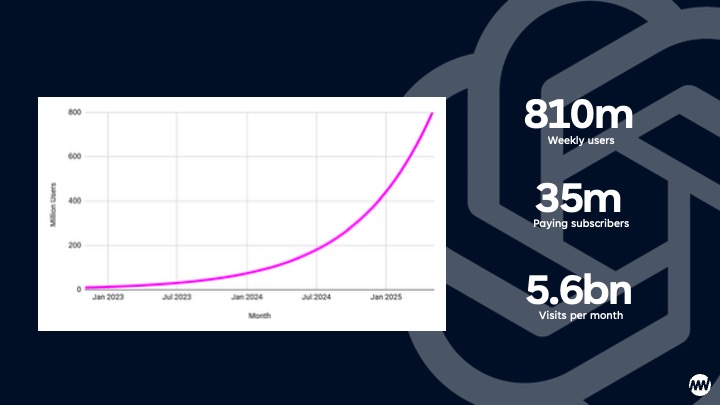
It now reaches around 810 million weekly users, with an estimated 35 million paying subscribers and more than 5.6 billion visits each month.
The scale has grown rapidly since launch. What started as a tool used mainly by early adopters is now part of how millions of people search for information, research products, compare options and make decisions.
That growth creates an obvious advertising opportunity. ChatGPT now combines three things marketers care about:
Scale: hundreds of millions of people using the platform every week
Frequency: billions of visits taking place each month
Intent: users actively explaining what they need, rather than passively consuming content
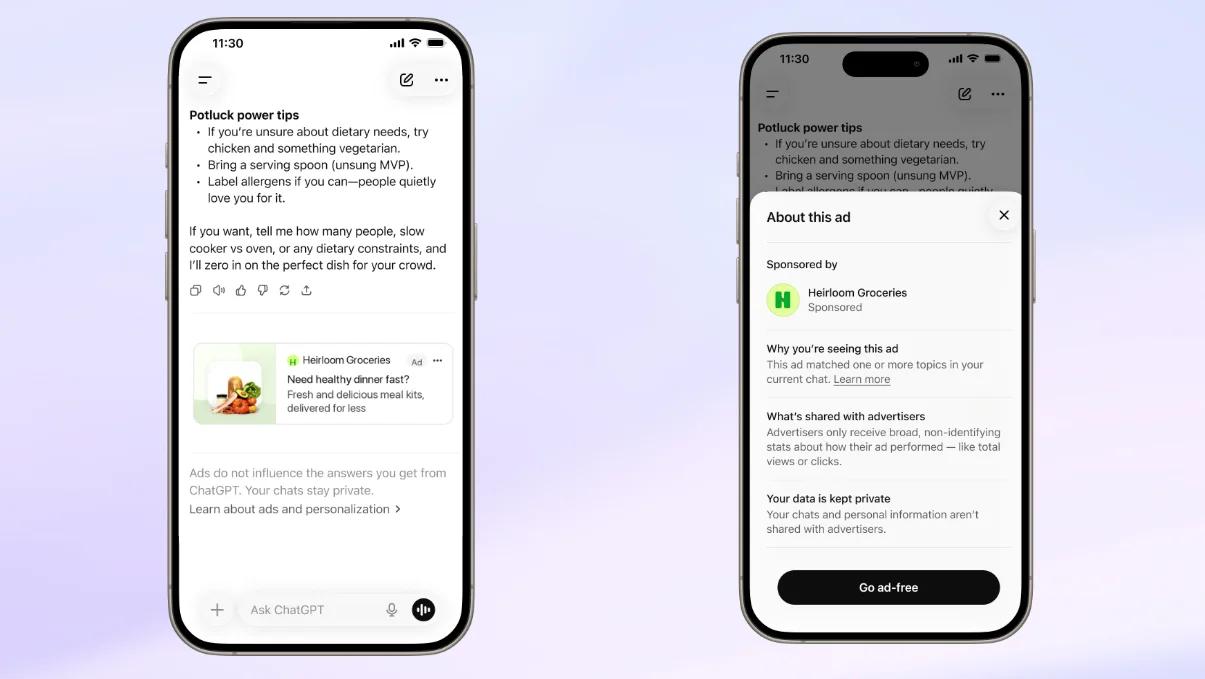
The current format of ads is relatively simple. Sponsored placements appear separately from ChatGPT's organic answer and can include:
Advertiser name
Headline
Description
Image
Landing page
CPC or CPM buying
Conversion tracking
From a media buying perspective, much of that is familiar. The bigger change is how relevance is determined.
From keywords to conversational intent
Paid search relies heavily on predicting what people will type. ChatGPT gives the platform much more context.
A search for "best CRM software" shows commercial intent.
A conversation like "We're a 20 person B2B business using spreadsheets and need a CRM that integrates with Outlook and costs less than £100 per user" gives far more information about the buyer and what they need.
For marketers, the planning question shifts from:
What keywords do we want to bid on?
To:
What customer problems, needs and decision points do we want to appear against?
That is likely to be one of the biggest differences between ChatGPT Ads and traditional paid search.
Where could ChatGPT Ads work best?
The strongest use cases are likely to be categories where customers spend time researching before they buy.
That could include:
Technology
Travel
Education
Automotive
Financial services
Home improvement
Professional services
B2B software
Three areas stand out.
1. High consideration purchases
ChatGPT is well suited to decisions where customers need to compare options, understand trade offs and narrow down a shortlist.
2. Problem led discovery
Someone might know they have a problem without knowing the solution.
For example:
"Our paid media costs are rising but revenue isn't. What should we look at?"
That person may not yet be searching for attribution software, CRO support or a new agency. ChatGPT can help define the problem before the customer has chosen a solution category.
3. Long tail intent
Conversational AI can interpret the many different ways people describe similar needs. That could make a broader range of long tail commercial intent easier to reach than with traditional keyword targeting.
Creative will need to be more specific
Generic paid media copy is unlikely to work well in a conversational environment.
If someone has just explained exactly what they need, an advert saying "Transform your business today" adds very little.
A message like "CRM built for B2B sales teams moving away from spreadsheets" is much more relevant.
Creative should be built around:
Customer problems
Use cases
Buying stages
Objections
Requirements
The closer the advert is to the situation being discussed, the stronger the relevance should be.
Landing pages become more important
ChatGPT can use the advertiser's landing page as one of the signals when determining relevance.
That means sending highly specific ads to a generic homepage is unlikely to be the strongest approach.
Landing pages should clearly explain:
Who the product or service is for
What problem it solves
Why someone should choose it
What the next step is
This also brings paid media closer to SEO, content and AI visibility. The clearer your proposition is to users and machines, the better positioned you are across both paid and organic AI discovery.
Frequently Asked Questions:
Can advertisers pay to appear in ChatGPT answers?
No.
Advertising is separate from the organic answer ChatGPT provides. Advertisers cannot pay to be recommended within the answer itself.
That means marketers need to think about two different areas:
Organic AI visibility
Whether ChatGPT can understand, reference and recommend your brand.
Paid AI visibility
Whether your advert can appear alongside relevant conversations.
Both are worth considering. One does not replace the other.
How should marketers measure ChatGPT Ads?
The early reporting model is familiar:
Impressions
Clicks
CTR
Spend
CPC
CPM
Conversions
But the channel should not automatically be judged against paid search benchmarks. Early tests should focus on whether ChatGPT creates incremental value.
Instead ask:
Are we reaching customers we would not otherwise reach?
Are we appearing earlier in the research journey?
Are certain customer problems or use cases more valuable?
Does ChatGPT assist conversions that happen elsewhere?
The first objective should be learning where the channel fits, not forcing it into an existing CPA target.
Where could ChatGPT Ads go next?
The current sponsored placement is likely to develop quickly.
Potential next steps include:
Conversational ads where users ask advertisers follow up questions
Live pricing, product and availability feeds
Quote, booking or eligibility tools inside ChatGPT
Transactions completed within the conversation
Richer insight into the questions and objections that appear before conversion
If these features develop, ChatGPT could move beyond being another traffic source and become part of the buying experience itself.
Should brands test ChatGPT Ads now?
For the right business, yes.
There is no need to move significant budget away from proven channels. A controlled test makes more sense.
ChatGPT Ads are most worth exploring if:
Customers research before buying
Your product solves a clear problem
Buyers compare multiple options
You have strong landing pages
You can measure commercial outcomes
You have enough creative variation to test different customer needs
The aim should be to understand whether ChatGPT can create incremental demand and where it fits within the wider customer journey.
What should marketers do now?
Before launching a campaign, map how customers might use ChatGPT during the buying journey.
Look at:
The problems they are trying to solve
The questions they ask
The options they compare
The objections they have
The information they need before buying
Then assess whether your proposition, content and landing pages make it clear when your brand is relevant.
That gives you a much stronger basis for testing than simply moving existing paid search creative into a new platform.
Thinking about testing ChatGPT Ads?
Mediaworks can help you assess where ChatGPT Ads fit within your wider paid media strategy, identify the strongest use cases to test and measure whether the channel is adding genuine commercial value.
If you want to understand whether ChatGPT Ads are worth testing for your business, get in touch with our team.