August 28 2026
The Website of the Future: 3 Key Takeaways from Our AI Web Design Masterclass
AI is changing the web, but perhaps not in the way many businesses expect.
The conversation around AI and websites often focuses on obvious additions such as chatbots or AI-generated content. But the changes happening now are much broader. AI is beginning to influence how websites are designed and developed, what users expect from digital experiences and even the role a website plays in the first place.
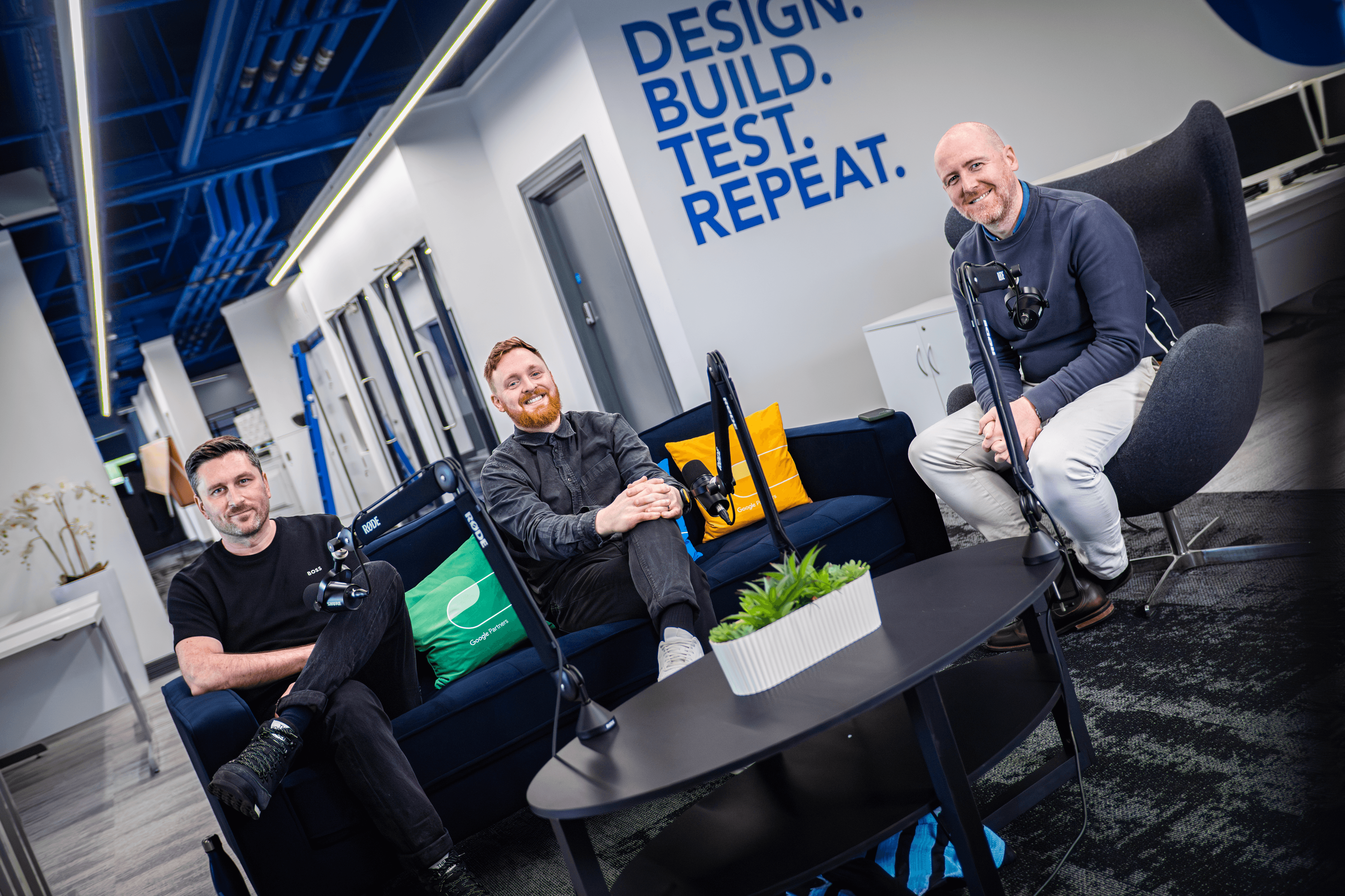
That was the focus of our latest Mediaworks Masterclass, The Website of the Future: How AI Is Changing Web Design and Development.
Across the session, three key themes emerged: AI is changing how we build websites, user experiences are becoming increasingly adaptive, and the relationship between people, websites and machines is changing.
1. AI is changing how we design and develop websites
One of the most immediate impacts of AI is on the process of building websites.
Rather than starting with a blank canvas and spending weeks moving from initial ideas to prototypes, AI is allowing designers and developers to get ideas into a tangible form much faster. This means teams can build, test and validate ideas earlier, rather than spending significant time discussing whether something will work before actually seeing it.
That changes the role of the design process. AI can help create assets, prototypes and layouts quickly, giving teams something real to react to. Instead of simply explaining a proposed journey to a client, for example, teams can increasingly build a prototype and use it to validate what works and what doesn’t.
Vibe coding is another part of this shift. AI development tools can generate code from natural-language instructions, making it possible to create prototypes, internal tools and smaller applications at a much faster pace. Developers can also use AI for lower-value tasks such as generating code snippets and debugging, freeing up more time for architecture, security, accessibility and other areas where expertise is essential.
But speed doesn’t mean AI can do everything.
There is still a significant difference between something that works and something that is production ready. A commercial website needs to be secure, performant, accessible, maintainable and capable of integrating with the wider technology ecosystem. AI can get teams a long way towards the finished product, but the final stage still requires human expertise and judgement.
The same applies to creativity. If everyone relies on AI to make the same creative decisions, there is a risk of a growing sea of sameness. AI is excellent at accelerating execution and aggregating information, but human input is still needed to challenge the obvious answer, protect brand differentiation and push an experience further.
The takeaway: AI isn’t replacing designers and developers. It’s changing where their time and expertise have the most value.
2. User experience is moving from dynamic to adaptive
The second major shift is happening from the user’s perspective.
For years, websites have moved from static pages towards increasingly dynamic experiences. The next step is adaptive UX, where the experience responds to what an individual user is trying to achieve.
The reason this matters is simple: user expectations are changing.
People are becoming used to digital experiences that respond quickly, understand context and provide increasingly relevant information. Even small differences can now feel noticeable. If you’re used to searching for something and immediately receiving highly relevant results, going back to an experience where you have to navigate through several pages to find what you need can feel frustrating.
Personalisation is a good example of this shift. What businesses consider personalised is not necessarily what users consider personalised. Simply adding someone’s name to an experience may once have felt innovative, but users now expect a much more relevant experience based on their needs, context and intent.
That is where AI can create a significant opportunity.
Instead of designing one journey for everyone, websites can increasingly respond to different intentions. A user looking for inspiration could receive a completely different experience from someone who already knows what they want and simply needs to complete a task.
The next evolution is generative UI, where experiences can potentially change in real time based on what the user is doing. Rather than designing every possible version of a page in advance, designers can create the underlying system, using brand tokens, components and rules that AI can work within.
This doesn’t mean giving AI complete freedom. Guardrails remain essential to ensure that generated experiences stay within the brand and design system. But those systems can give AI enough flexibility to create more relevant experiences without requiring designers to manually create every possible variation.
The takeaway: Good UX is moving away from one-size-fits-all journeys towards experiences that adapt to individual intent.
3. The relationship between users, websites and machines is changing
The final shift could ultimately have the biggest impact on what a website actually is.
AI is changing how people discover and interact with information. Increasingly, users can ask an AI tool to find something, compare options or complete a task rather than navigating through websites themselves.
That creates an interesting question: what happens to the website when the user doesn’t necessarily need to visit it?
The answer isn’t that websites simply disappear. Instead, their role could change.
We could move towards websites that effectively have two experiences running in parallel. One is designed for humans: visual, engaging and easy to explore. The other is designed for machines: structured, direct and easy for AI systems to understand and act upon.
For example, a person might visit a website to browse, compare and explore. An AI agent, meanwhile, may simply need to access the relevant information, understand the available options and complete an action on the user’s behalf.
That has implications for how websites are built. Content, data, APIs and the underlying architecture become increasingly important because websites need to be understandable not only to people, but to the systems interacting with them.
This also changes how we think about future-proofing. Businesses shouldn’t only be asking whether their website works well today. They need to consider whether its content and functionality can be understood and accessed by the AI-driven experiences that are increasingly becoming part of how people use the web.
The takeaway: Websites are becoming part of a wider machine experience, not simply destinations that users navigate to.
So, what does the website of the future look like?
There isn’t a single answer yet. The technology is moving too quickly to predict exactly what the web will look like in three years.
What is clear is that the traditional model of designing a set of pages, building them and expecting everyone to follow the same journey is beginning to change.
AI is accelerating how websites are built. User expectations are pushing experiences towards greater personalisation and adaptability. And AI agents are creating a new machine-facing layer that businesses will increasingly need to consider.
The key message from the Masterclass wasn’t that AI will replace designers, developers or websites.
It was that AI is changing the relationship between all three.
The businesses that prepare for that shift won’t necessarily be the ones using the most AI. They’ll be the ones that understand where AI can accelerate their processes, where human judgement is still essential, and how to create experiences that work for people today while preparing for the way people will interact with the web tomorrow.