April 29 2026
Websites That Perform in the Age of AI: 5 Takeaways from Our Latest Mediaworks Masterclass

A lot of websites are still built for a version of the internet that’s rapidly vanishing.
For years, the job of a website was clear: Build something that users can navigate, internal teams can edit, and search engines can discover. That’s still true, but it’s no longer the full picture.
In our latest Mediaworks Masterclass, Websites That Perform in the Age of AI, we looked at what’s changed, what it means for brands, and how websites need to evolve as AI becomes a critical part of the discovery journey.
The session explored a simple idea with wide-reaching implications: your website is no longer only consumed by people. It’s also interpreted, surfaced and evaluated by large language models (LLMs).
That changes how websites should be structured, how content should be written, and how performance should be defined.
Here are our top five takeaways from the discussion.
1. Your website now has three audiences
One of the biggest shifts discussed was that websites are no longer built for just one audience.
Traditionally, the focus was on the end user. How do they navigate the site? How do they find what they need? How do they move towards conversion? And there was always a second audience: the internal team responsible for managing content and keeping the site up to date.
Now there’s a third audience: LLMs.
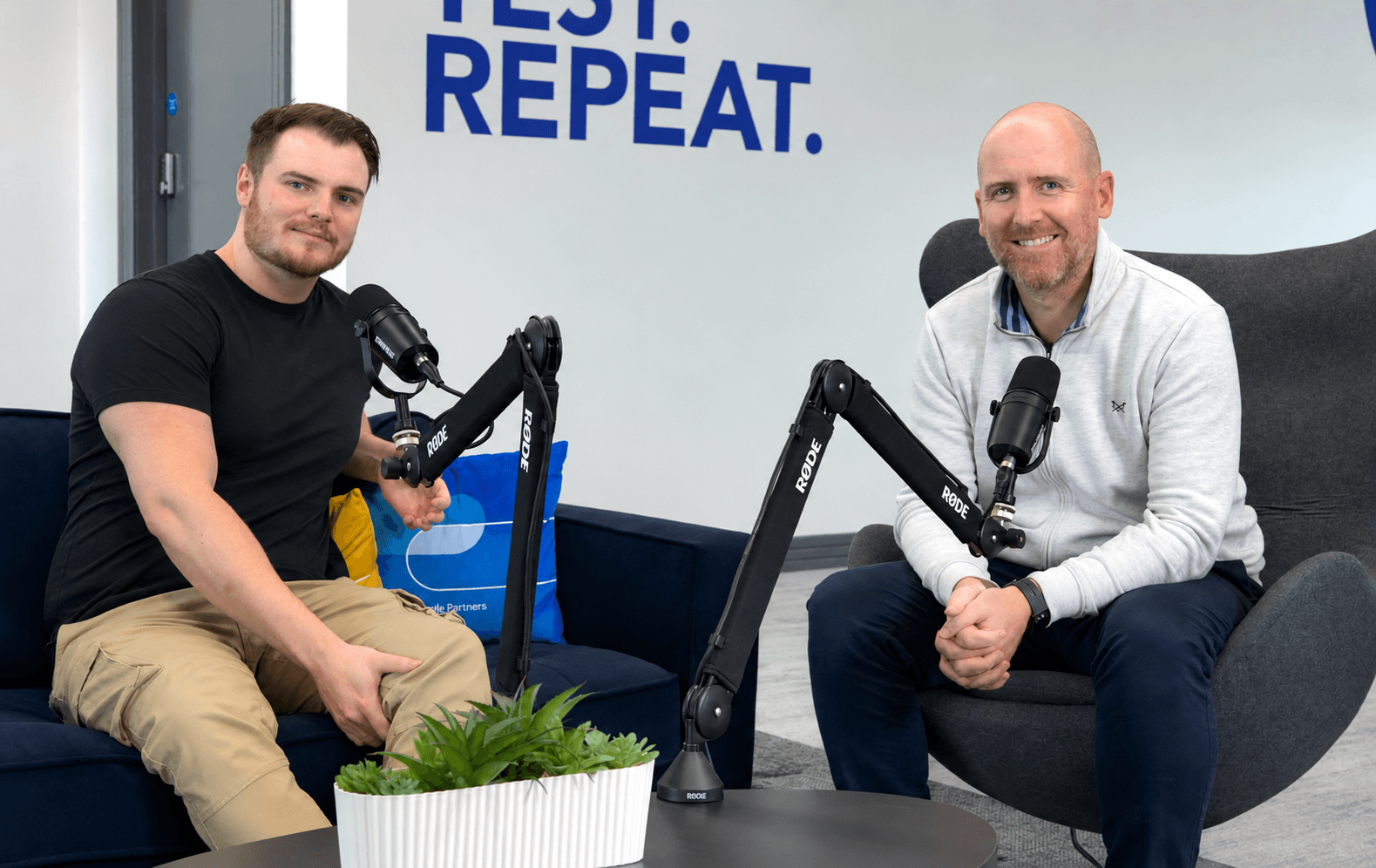
That means websites need to work for users, support content managers, and provide enough structure and context for AI tools to understand the meaning and timing of the content. As Jonny explained during the session, websites are now expected to do more than drive engagement and conversion. They also need to give machines the right content, in the right format, with the right context wrapped around it.
That’s a real change in how websites should be designed.
2. Websites are becoming sources, not just destinations
Another strong theme was that your website mayt no longer be the final destination in the user journey. In many cases, it’s becoming the source.
People are now discovering and validating information in different ways. They may still arrive on your website, but they’re increasingly doing research through AI Overviews and LLMs first. That means the role of the website is changing. It still needs to convert, but it also needs to provide reliable, structured information that can be surfaced earlier in the process.
Content written purely for campaigns or end-of-funnel pushes often struggles here. If a site is built around launches, seasonality and transaction-focused pages, it can miss the wider informational context that LLMs need. The risk is that your site says plenty about what you want to sell, but not enough about the broader subject area you want to be discovered for.
That is why the best-performing websites must think more carefully about topical depth, not just page-level messaging.
3. Structure is doing more of the heavy lifting
This was one of the clearest practical takeaways from the masterclass.
A lot of websites still treat structure as secondary to design. Get the page looking right, then fill it with content. What came through in the session is that this mindset is becoming less useful. Structure now carries more weight.
The team shared a few common issues they see on sites underperforming:
Content written for campaigns rather than intent.
Pages built around navigation rather than actual questions.
Information spread too thinly across separate pages, with poor semantic structure and inconsistent formatting.
The better approach is to move from pages to topics.
That means building broader, more useful hubs of information. Not splitting everything into separate pages and expecting search engines or LLMs to stitch it back together. It means using clear hierarchies, well-structured content, semantic HTML, internal linking and scannable layouts. It also means giving pages stronger opening summaries, key takeaways, named experts, updated timestamps and original data where possible. All of that helps users and machines understand what the content is saying and why it can be trusted.
The phrase that probably sums it up best is this: structure is now as important as design.
4. Good websites are now built more like systems
From a development perspective, the session made it clear that websites are increasingly built differently too.
Instead of only fixed page templates, the team explained the shift towards component-based systems. Rather than designing a homepage, a service page, and an about page as separate entities, the goal is to define reusable content types and components that can work across the site. That gives internal teams more flexibility, creates more consistency for users, and gives search engines and LLMs a more predictable structure..
This is where CMS thinking becomes more important too. A content management system (CMS) is no longer just a place to edit copy and upload images. It’s closer to a long-term content operating system. The way content is modelled, tagged, related and governed inside that system plays a key role in how future-ready the site is.
The session also outlined four pillars for future-proofing a website:
modular content
API-first or headless thinking
a structured data layer
continuous optimisation
The final one will become essential as AI evolves. Launch is no longer the finish line. If user behaviour, search and AI continue to develop at the same rate, websites must allow for regular refinement rather than total rebuilds every few years.
5. AI rewards clarity, not cleverness
The final takeaway was simple yet might be the most important.
There’s a temptation with any platform shift to chase the system. To look for shortcuts, hacks or ways to outsmart the algorithm. That’s not the approach we recommend.
What came through clearly is that AI rewards clarity.
Clear structure, content, hierarchy. As well as defined signals of trust and pathways through the site. Pages that are easy to scan, easy to interpret and easy to extract information from. Websites that try too hard to be clever, overly designed or overly engineered, risk being harder for users and machines to engage with.
As Mediaworks COO, David Norris said in the closing section of the session, “the goal is not to chase algorithms all the time, it’s to build a system that can adapt.”
That is a much more useful way to think about websites in 2026.
Final thought
Websites are not less important in the age of AI. In many ways, they’re becoming more important.
But the job isn’t the same as it was even a year ago.
They need to serve more audiences and carry more context. They need better structure, stronger foundations, and a clearer role in the wider discovery journey. And they need to be built with enough flexibility to keep improving as the market changes.
If you want to understand how your website is structured for discoverability, how it’s performing today, and how ready it is for AI-driven search and discovery, Mediaworks offers a free website review.